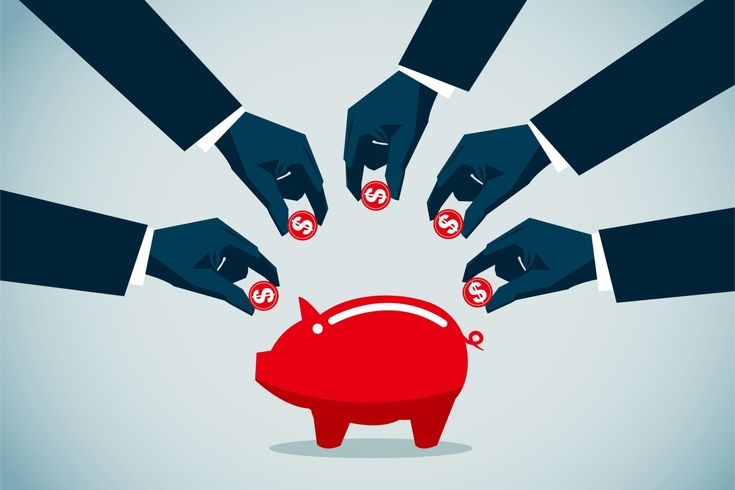
For decades, the savings account has been sold as the responsible home for money. It feels safe, familiar, and disciplined. Parents recommend it, banks promote it, and many people measure their financial health by how much cash they have sitting there. Yet when you look closely at how money actually behaves over time, a hard truth emerges: smart money rarely stays idle in a savings account for long.
This is not because savings accounts are useless. They serve an important purpose. The problem begins when people mistake safety for growth, and comfort for progress. In the modern financial world, letting money sit still often means quietly losing ground.
Safety Without Growth Is a Hidden Risk
A savings account protects your money from sudden loss, but it does not protect its value. Inflation, even at modest levels, steadily erodes purchasing power. What your money can buy today will almost certainly cost more tomorrow. When interest earned is lower than inflation, the real value of your savings shrinks every year, even though the number on the screen goes up.
This erosion is subtle, which is why many people ignore it. There is no dramatic crash, no alarming notification. Instead, it shows up years later when goals feel further away despite years of saving. Smart money recognizes that risk is not just about losing money, but also about failing to grow it.
The Difference Between Parking Money and Putting It to Work
Smart money treats cash like a tool, not a trophy. Holding cash is useful for liquidity, emergencies, and short-term needs. Beyond that, idle money is seen as inefficient. Wealth is built when money is put to work, generating returns that compound over time.
This mindset shift is critical. Saving is defensive; investing is constructive. One preserves what you have, the other builds what you want. People who understand this distinction stop asking, “How much can I save?” and start asking, “Where can this money work best for me?”
Opportunity Cost: The Silent Wealth Killer
Every financial decision carries an opportunity cost. When money sits in a low-yield account, the cost is what it could have earned elsewhere. Over months, this seems insignificant. Over years and decades, it becomes enormous.
Compounding amplifies this effect. Money that earns returns begins generating earnings on those earnings. Money that sits idle does not participate in this process. Smart money is acutely aware of time. It understands that early, consistent growth often matters more than dramatic short-term gains.
Why Banks Love Idle Money
Banks promote savings accounts because idle money benefits them. Deposits provide cheap capital that banks can lend or invest at higher rates. The spread between what they pay you and what they earn is part of their profit model.
This does not mean banks are villains. It means incentives are not aligned with your long-term wealth growth. Smart money understands this and does not confuse institutional marketing with personal financial strategy.
Liquidity Has a Purpose, Not a Permanent Address
One reason people cling to savings accounts is liquidity. Having quick access to cash feels empowering. Smart money values liquidity too, but it assigns it a role, not a throne.
Emergency funds, short-term expenses, and planned purchases belong in liquid accounts. Long-term goals do not. When liquidity becomes the default instead of a deliberate choice, money stagnates. Smart money balances access with growth, ensuring cash is available when needed but productive when not.
Volatility Is Not the Same as Risk
Many people avoid investing because they fear volatility. Market ups and downs feel dangerous compared to the calm stability of a savings account. Smart money views this differently.
Volatility is visible and emotional. Inflation risk is quiet and mathematical. Over long periods, diversified investments have historically rewarded patience. The real risk often lies in doing nothing, especially when time horizons are long. Smart money accepts temporary fluctuations in exchange for long-term progress.
Smart Money Follows a System, Not Emotions
Idle money often reflects emotional decision-making. Fear of loss, uncertainty, or past mistakes can paralyze action. Smart money replaces emotion with systems.
Automatic investing, asset allocation, and periodic rebalancing remove the need for constant decisions. When money moves according to a plan, it is less likely to sit idle out of hesitation. Discipline, not prediction, becomes the driver of results.
The Role of Savings in a Smart Money Strategy
Smart money does not eliminate savings accounts; it uses them intentionally. Savings become staging areas, not destinations. Money enters, waits briefly, and then moves to where it serves a defined purpose.
This clarity prevents both extremes: reckless investing and excessive hoarding. Each dollar has a job, whether it is protecting against emergencies, funding near-term needs, or growing future wealth.
Why Doing Nothing Feels Comfortable but Costs More
There is psychological comfort in inaction. A savings account reassures without demanding engagement. Investing requires learning, patience, and acceptance of uncertainty. Smart money chooses discomfort early to avoid regret later.
Over time, the cost of inaction compounds just as powerfully as returns. Missed growth opportunities accumulate quietly, only becoming obvious when it feels too late to catch up easily.
Wealth Is Built Through Movement, Not Storage
Money behaves like energy. When it moves with intention, it creates momentum. When it stagnates, it loses potential. Smart money understands that wealth is not built by storing cash indefinitely, but by directing it thoughtfully.
This does not mean chasing every opportunity or abandoning caution. It means recognizing that standing still in a changing economy is itself a decision, and often an expensive one.
The Smart Money Mindset
Smart money never sits idle because it respects time, understands inflation, and values opportunity. It uses savings accounts as tools, not crutches. It balances safety with growth and replaces fear with strategy.
In the end, the question is not whether a savings account is safe. It is whether safety alone is enough to build the future you want. Smart money knows the answer, and it acts accordingly